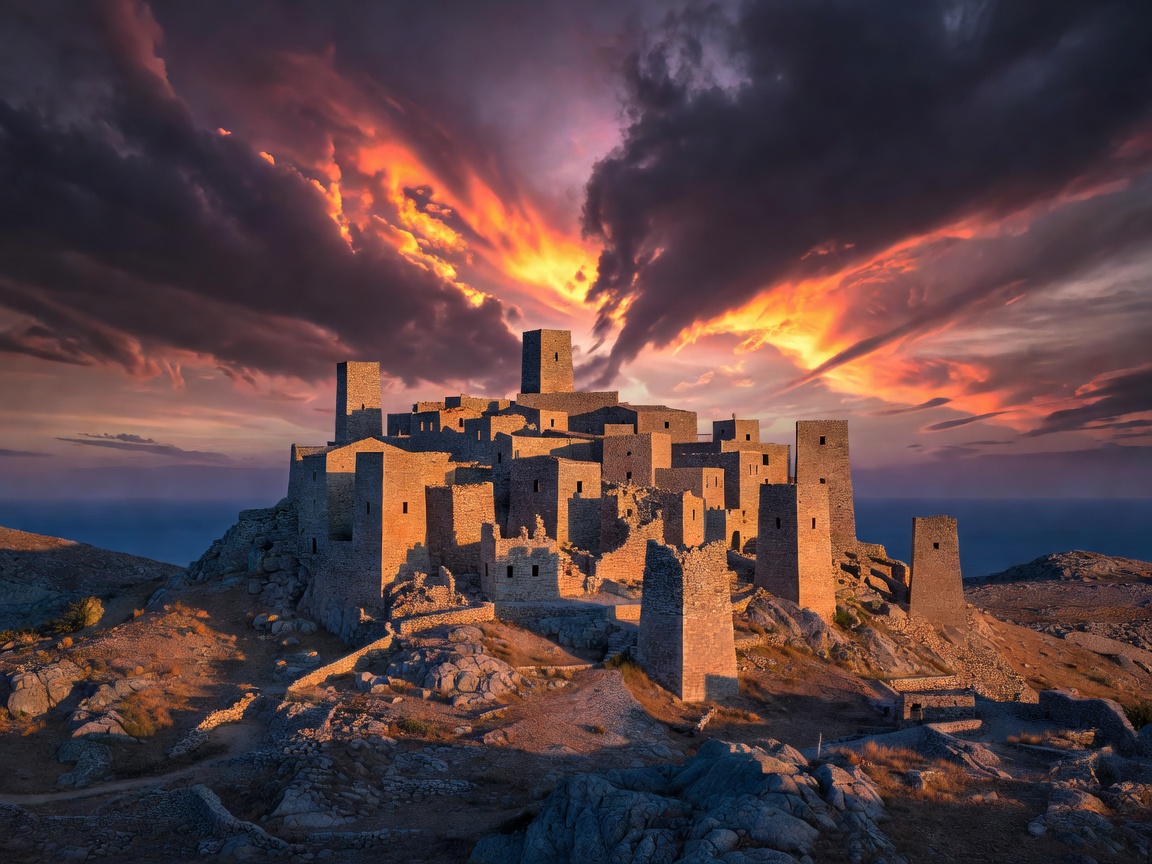
The Fierce Independence of the Maniots
Projecting south from the massive wall of Mount Taygetos, the Mani Peninsula occupies one of the most culturally distinct territories in the Mediterranean. Historically protected by impenetrable topography, the inhabitants—claiming direct lineage from ancient Spartan warriors—never fully succumbed to Venetian, Frankish, or Ottoman imperial dominion.
In place of centralized government, Maniot society organized itself into competing patriarchal family clans (falies). Conflict over land, water cisterns, and honor gave rise to an architectural archetype unique to the region: the multi-story stone residential defensive tower (pyrgos). Settlements such as Vathia, Kita, and Kitta consist entirely of clusters of these rectangular bastions, erected with slit windows, machicolations, and high parapets.
Outer Mani vs. Deep Mani (Kato Mani)
Travelers navigating the peninsula experience two distinct geographic expressions:
- Outer Mani (Messenia): Characterized by fertile terraced olive groves, rushing mountain springs from the Taygetos gorges, and sheltered coastal anchorages like Kardamyli and Limeni.
- Deep Mani (Laconia): Extending south of Areopoli toward Cape Matapan (Tenaro), this region becomes increasingly arid, treeless, and stark. Searing white limestone shelves support only wild thyme, thorny burnet, and salt pans.
"At Cape Matapan, the southernmost tip of mainland Greece, the ancients identified a sea cave as the mythical descent into Hades. The lighthouse standing above the churning meeting point of the Ionian and Aegean seas marks a true geographic boundary."
Byzantine Micro-Chapels & Cave Architecture
Despite its warlike reputation, the Mani contains one of the densest concentrations of small single-cell Byzantine and post-Byzantine churches in the Hellenic world. Frequently built directly into limestone scree or perched on exposed headlands, these tiny sanctuaries house vivid eleventh-to-fourteenth-century wall frescoes depicting warrior saints, local flora, and biblical cycles executed in earthy mineral pigments.
Near Pyrgos Dirou, the subterranean Diros Caves reveal a vast flooded cavern network extending several kilometers beneath the limestone plateau. Visitors glide along submerged passages aboard flat-bottomed wooden skiffs past dense forests of stalactites and calcified draperies.
Comparative Assessment for Travelers
Visiting the Mani is best suited for independent road travelers seeking deep history, stark natural beauty, and dramatic coastal isolation over traditional resort convenience.
Key Attributes
- Distinctive accommodation in restored stone tower suites.
- World-renowned Kalamata-variety extra virgin olive oil.
- Dramatic, uncrowded pebble coves with crystal-clear water (e.g., Mezapos, Alypa).
- Rich literary and historical heritage.
Travel Challenges
- Public transport south of Areopoli is practically non-existent.
- Beaches are almost exclusively composed of sharp limestone pebbles, requiring water shoes.
- Midsummer heat on the treeless southern tip can be unforgiving.
- Winding, narrow roads with occasional falling-rock hazards.
Culinary Profile: Salt, Pork, and Wild Thyme Honey
The austerity of the terrain is reflected directly in Maniot gastronomy. With fresh seafood consumed locally along the ports of Gythio and Gerolimenas, the inland mountain tables celebrate cured meats and wild foraging. The signature regional delicacy is syglino—lean pork cured in salt, smoked over wild sage for hours, boiled with local oranges and wine, and stored in extra virgin olive oil. Also ubiquitous are lalangia: crisp fried ribbons of dough laced with cinnamon and clove, often served alongside sharp sheep's milk cheese (sfela).