The Architectural Legacy of the Zagorochoria
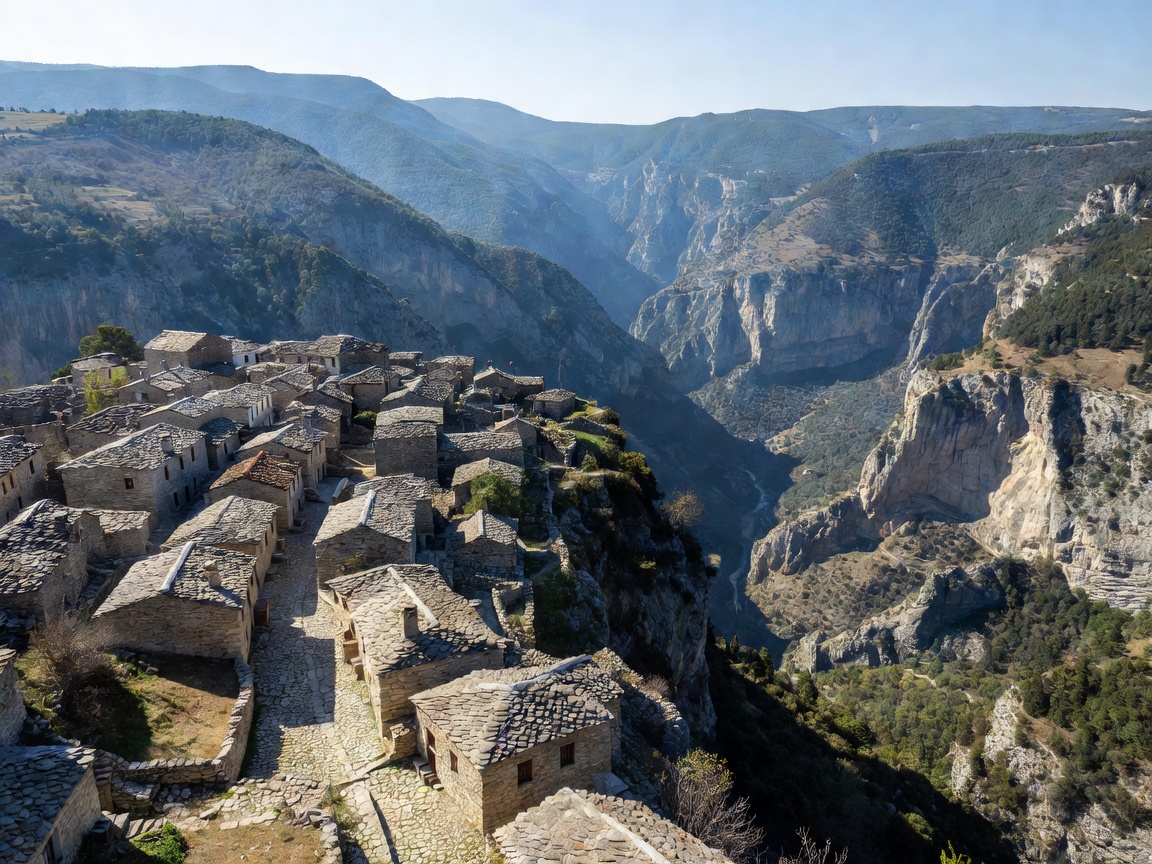
Tucked deep into the limestone folds of northwestern Epirus, the region collectively known as Zagori (derived from the Slavic designation meaning "behind the mountains") presents an architectural unity rarely matched anywhere else in southeastern Europe. The forty-six villages comprising the Zagorochoria were constructed primarily during the eighteenth and nineteenth centuries, when the area enjoyed special autonomous status and tax privileges under Ottoman rule.
Local merchants traveled widely across Vienna, Constantinople, and Bucharest, returning significant wealth to their mountain birthplaces. This capital funded complex civic works: wide cobbled paths known as skales carved into vertical rock faces, vaulted three-arched river crossings, and fortified stone mansions (archontika) designed to withstand both intense alpine winters and regional brigandage.
Limestone, Slate, and the Dry-Stone Guilds
Every roof, retaining wall, hearth, and lintel in Zagori is fashioned from local sedimentary rock. Traveling guilds of master stonecutters, known historically as koudaraioi, worked with minimal mortar, locking slabs of grey limestone and black slate together using gravity, precise channelling, and interlocking keystones. The famous arched bridges—such as the triple-arched Plakidas Bridge (Kalogeriko) near Kipi and the single-span Kokkoris Bridge—were engineered to flex during spring snowmelts when mountain torrents swell the Voidomatis River basin.
"The craft of the Epirus stone guilds relied entirely on understanding regional limestone fractures. Even the street paving slabs were set on edge rather than laid flat to ensure mule hooves found traction during mountain freezes."
Vikos Gorge: Scale and Footpath Topology
Slicing through the central plateau is the Vikos Gorge, listed in the Guinness Book of Records for its extreme depth-to-width ratio. Extending approximately twenty kilometers with limestone canyon walls reaching heights between 400 and 1,000 meters, the gorge forms a natural biological sanctuary. The Voidomatis River, which emerges from subterranean springs at the base of the gorge, remains one of the coldest and cleanest rivers in Europe.
Hiking the full traverse between the villages of Monodendri and Vikos or Papingo demands between six and seven hours of sustained walking over uneven limestone boulders. The route requires reliable hydration planning, as drinkable spring outlets in the canyon bed are limited to specific resurgence points.
Seasonal Comparison & Practical Logistics
Planning an expedition to the Pindus requires assessing seasonal climate extremes. Mountain passes regularly experience heavy snowfall between December and March, while mid-summer temperatures remain pleasant compared to the baking Greek coastal lowlands.
Expedition Advantages
- Absence of tour bus mass transit in small settlements.
- Pristine air quality and natural cold mountain river pools.
- Rich culinary traditions: wild mushroom pies, sheep feta, and cornbread (batsaria).
- Interconnected network of well-marked walking routes.
Planning Considerations
- Requires a private vehicle; regional public buses run infrequently.
- Steep cobbled alleys require sturdy footwear; no vehicle access inside village centres.
- Heating costs make winter accommodation rates slightly higher.
- Navigational caution required on switchbacks during autumn rain.
Traditional Foodways of Northern Epirus
Cuisine in Zagori reflects high-altitude pastoral living. While coastal Greek menus revolve around seafood and summer vegetables, Epirus is famous for savory pies (pites). Made with gossamer-thin phyllo rolled by hand on wooden boards, fillings include local wild greens, nettles, leeks, aged barrel-fermented feta, and minced goat meat. Tavernas in Aristi, Megalo Papingo, and Vitsa feature dishes slow-cooked in cast-iron pots (tsoukali) over open beechwood fires.